
Palm Coast Previous Resident Sources
Each era calls for a different record. Recent Palm Coast address history often starts online. Earlier work moves to historic indexes, office terminals, library shelves, and parent-county custodians. The table keeps the record's real coverage and its proper use in view.
| Source | Years It Covers | Where Held | What It Shows |
|---|---|---|---|
| Landmark deed index | September 1, 1988 to present | Flagler Clerk online | Parties, dates, instrument, book/page, released image |
| Historic county records | 1917 to 1988 | Clerk Records Management and terminal | Earlier deeds, probate, marriage, tax, and court groups |
| Parent-county records | Before 1917 | St. Johns and Volusia custodians | Land history before Flagler County existed |
| Palm Coast directories | Modern editions; exact years unverified | Flagler County Library | Listed subscriber or occupant by name and address |
| Federal census | Named schedules through 1950 | National Archives and library databases | Households within the geography used in that census year |
| Aerials and permits | Aerials 2009, 2011, 2014, 2017; permit extent unstated | Property Appraiser and Palm Coast | Structure change, work dates, and named project parties |
Start with the current parcel even when the goal is far older. Its legal description gives continuity that a street name may not. Then choose the source that overlaps the target year. Directory or census evidence can support occupancy, while deeds establish the ownership path.
The current tax roll can also show a separate owner mailing address, homestead status, sales history, year built, and a building sketch. A matching Palm Coast situs and mailing address may support owner occupancy, but does not prove it. Trust, estate, or management addresses need the same caution. Save the record as a dated snapshot because assessed ownership and mailing details can change.
Palm Coast Records Cross 1988
The Flagler Clerk's Landmark Official Records index begins on September 1, 1988. It can be searched by name, party type, document type, date range, instrument number, official-record book and page, and indexed legal description. A new document may be indexed before its image is released, so a missing image is not proof that the deed is unavailable.
For prior years, use the Clerk's historic name search. The documented fallback is to enter the full name and, after no match, put an asterisk before the surname. Public computers at the Kim C. Hammond Justice Center and staff searches provide further access. A staff name search costs $2 per year per name.
The historic records search shows the earlier online doorway.
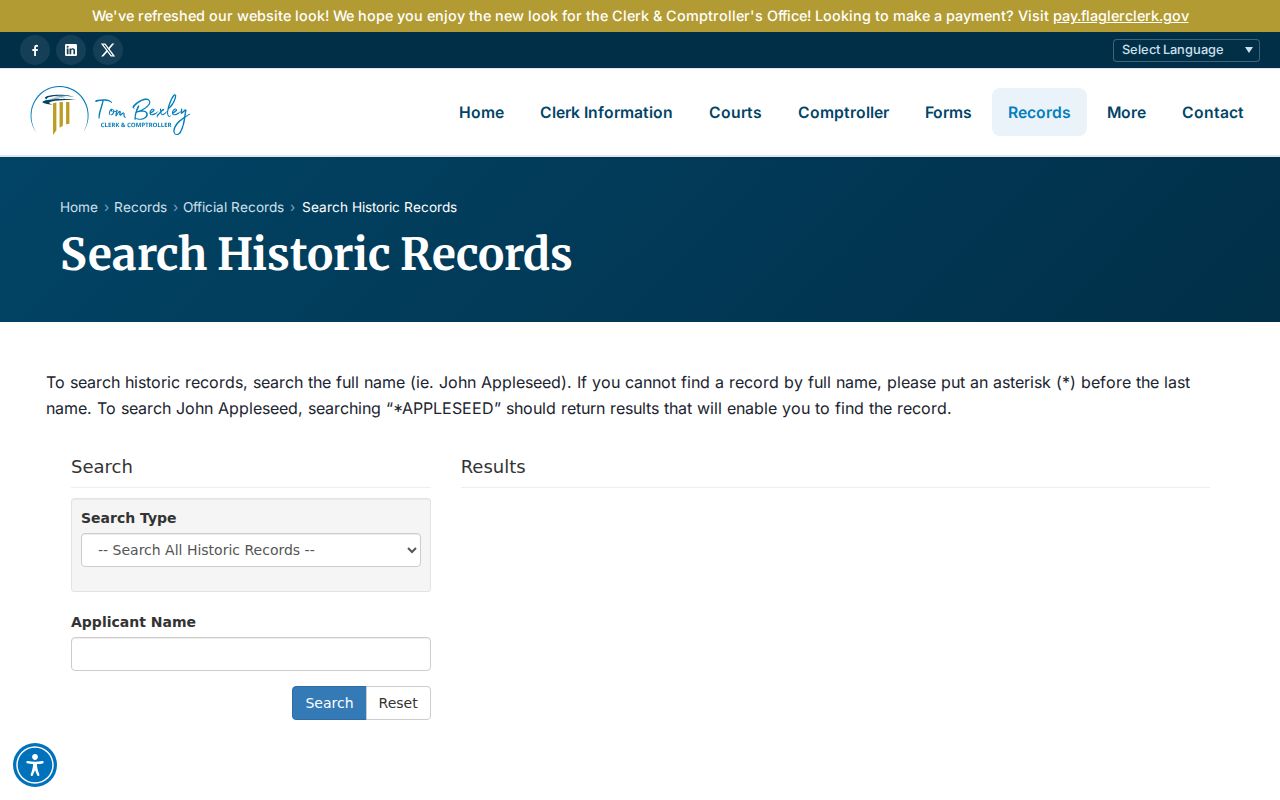
The historic screen bridges an online deed chain to the office and book-based records kept from county creation.
Trace Flagler Past Owners Backward
A deed chain is the sequence of recorded transfers for the same land. Work backward from today's assessed owner, and prove each step with the legal description. Do not assume the document filed just before a deed is the prior purchase. Mortgages, satisfactions, corrective deeds, trust transfers, and family conveyances may sit between sales.
- Open the current parcel card. Copy the owner spelling, mailing address, parcel ID, subdivision, lot, block, and latest sale reference.
- Retrieve that purchase deed by instrument or official-record book and page. Confirm grantee, grantor, legal description, and date.
- Search the seller as an earlier grantee. Compare the land description before accepting the older transfer.
- Repeat through the online cutoff. Then move to historic search, courthouse terminal, staff help, and deed books.
- Add plats when the street text changes. Use probate and obituaries when an owner died, and permits to date the structure.
- Grantor / grantee
- The grantor gives an interest; the grantee receives it.
- Chain of title
- The linked sequence of transfers for the same land.
- Legal description
- The lot, block, subdivision, plat, or boundary wording that identifies land even when its street label changes.
The Landmark coverage and access page gives context for online official records.
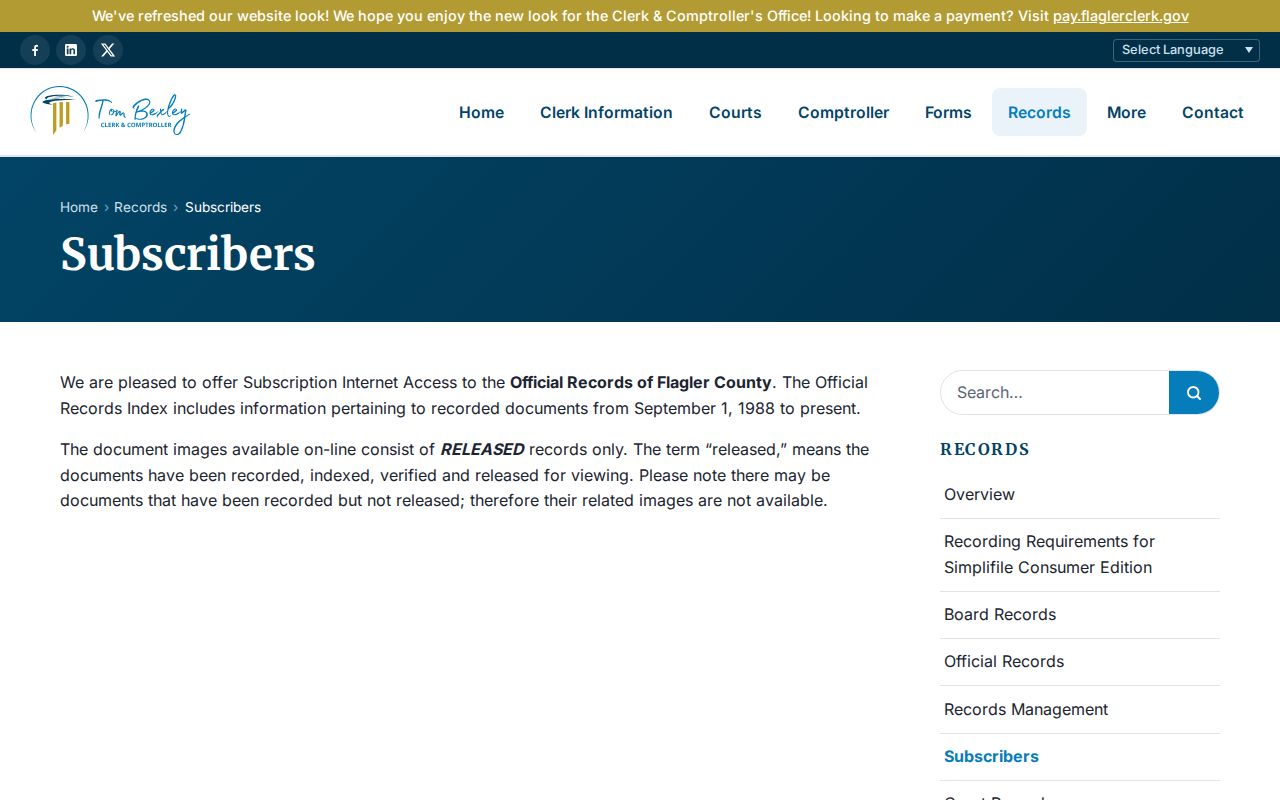
The coverage screen helps set the point where a digital search must hand off to older channels.
Read the whole recorded image when it is available. A deed header provides instrument number, recording date, book and page, and documentary-tax information. The body supplies the party names, legal description, return-to address, and often a prior-record reference. That prior reference can jump directly to an earlier transfer, but the legal description still has to match. Social Security numbers and other protected fields may be redacted.
Palm Coast History Before Flagler
Flagler County was created in 1917 from parts of St. Johns and Volusia Counties. That boundary is critical for previous residents research. Flagler governmental books begin with county creation, so an older land, marriage, probate, or court trail may continue in a parent county or state archive.
Palm Coast itself began as an ITT planned development around 1969 and incorporated in 1999. A claim about a Palm Coast resident before the planned-community era may actually concern a rural precinct, Bunnell, Flagler Beach, or parent-county geography. Follow the parcel and legal description, not today's city name.
Records Management holds early probate, court, marriage, tax, and County Commission material. The Sisco Deen Research Library also holds a WPA-era inventory of early Flagler county archives, useful for checking which office once kept a record group.
Date Palm Coast Past Residences
Ownership dates do not always date the house. The parcel card may include building year and characteristics, while Palm Coast permits can show issue and final dates, work description, applicant, and contractor. County aerial products are documented for 2009, 2011, 2014, and 2017. Together, these sources can show whether a structure appears, expands, or changes between owners.
Classic Sanborn fire-insurance maps are a poor fit here. No official Palm Coast Sanborn series was found, and most large-scale city development came after the classic program. Use subdivision plats, permits, aerials, deeds, and the Palm Coast Historical Society as the local substitute. Do not invent a Sanborn run or a house-history guide that the research did not locate.
Note: A permit names a project party, not necessarily a previous resident of the address.
Pair Palm Coast Directory Years
Owners are only one layer. A directory arranged by address can identify a listed subscriber in its edition year. A named census schedule can show a household, though the map and enumeration district must match the historic geography. An enumeration district is the small area assigned to one census taker.
- Fix the parcel and legal description in current records.
- Choose a directory edition nearest the target year. Record the entry exactly and note its publication date.
- Find the address within the relevant census geography where named schedules are open through 1950.
- Compare household names with deeds, newspapers, probate, and obituaries. Treat differences as questions, not errors.
The National Archives census research page is the federal access point for schedules and research guidance.
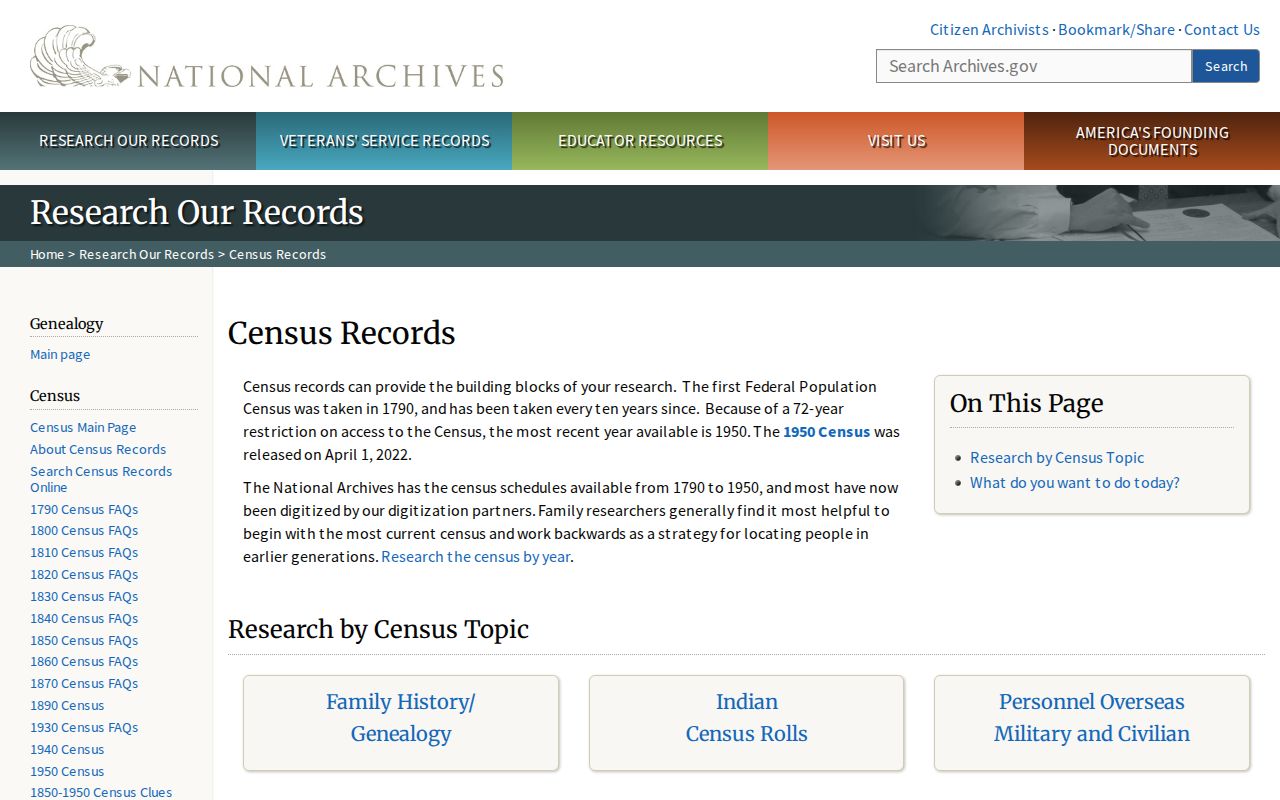
The archive guidance supports the census half of the workflow while local deeds keep the address tied to the correct land.
Close Palm Coast Resident Trails
A former owner's trail may end in probate rather than another deed. Search the Flagler Clerk's Benchmark docket for a decedent, personal representative, attorney, and public case events. Then compare the legal description and any recorded probate instrument. Sealed, confidential, and redacted content remains unavailable.
The Sisco Deen Research Library holds more than 6,000 indexed obituaries and a database exceeding 256,000 names. Its family and place files, cemetery inventories, bound Flagler Tribune volumes from 1918 through 1980, and tax or court binders can connect a former owner to heirs. Use these as leads, then confirm names in probate or deeds.
Access is not limited to the web. Call the Clerk's Probate division at 386-313-4497 for file and copy procedure. For library research, begin with the indexed obituary or family database before asking for a broad surname search. A date of death, spouse, street, or subdivision can separate two people with the same name and keep the request focused.
A previous residents search may also move outside Palm Coast. Rapid interstate and retirement migration means a later mailing address, obituary, or probate venue may be elsewhere. Label that change accurately instead of forcing every stage into the city.
Palm Coast Previous Household Limits
Even a careful chain cannot produce a complete occupant list. Deeds prove title interests, not residence. Tax rolls omit renters and non-owner relatives. Directories include only listed subscribers, and open census names stop at 1950. Palm Coast did not exist in its current form for those older schedules. The exact InfoUSA edition years in the county library catalog were not verified.
Use the Palm Coast city directory page for the collection details, then bring only the relevant edition back to the address trail. Record gaps are evidence limits. They are not proof that nobody lived at the property.
Lawful use. Research Palm Coast past residents for house history, genealogy, heir questions, or personal curiosity. Never use the results to track, stalk, harass, or harm a living person.